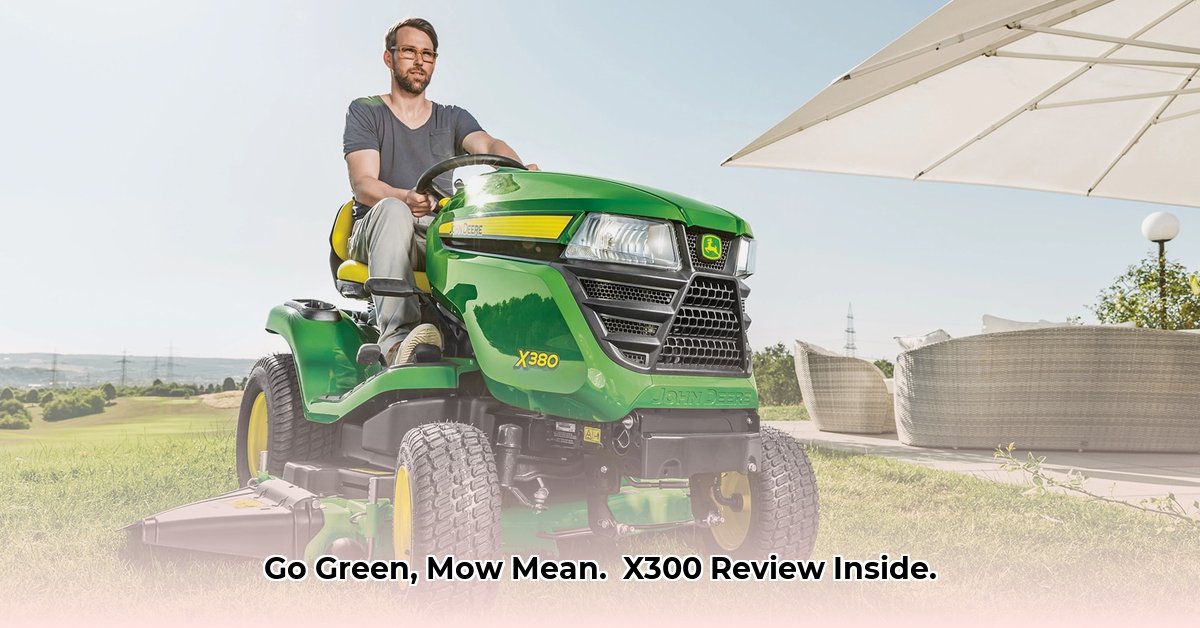
Getting to Know the John Deere X300
The John Deere X300 is a popular mid-sized riding lawn tractor designed for homeowners with moderately sized lawns. It strikes a balance between maneuverability and power, making it suitable for many suburban yards. Typically powered by a reliable Kawasaki or Kohler engine (known for durability), the X300 offers a range of cutting deck sizes depending on the model. Key features often include a comfortable seat, intuitive controls, and adjustable cutting height, enhancing user convenience. But is this convenience truly sustainable? For added protection, consider a protective cover.
| Feature | Description |
|---|---|
| Engine | Typically a Kawasaki or Kohler engine; known for longevity and reliability. |
| Cutting Deck Size | Varies by model; choose a size appropriate for your lawn. |
| Cutting Height Adjustment | Easily adjustable for precise lawn height control. |
| Key Features | Comfortable seat, intuitive controls, cruise control (on select models). |
Performance Review: Efficiency and Maneuverability
Many users praise the X300's efficiency. The larger cutting deck significantly reduces mowing time compared to push mowers, appealing to busy homeowners. Maneuverability is generally good, but the turning radius might be slightly less tight than smaller models. The ease of use makes it suitable for both experienced and novice users. However, its fuel efficiency and environmental impact must be considered alongside this performance.
Sustainability Analysis: The Environmental Footprint
The X300, like most gas-powered mowers, isn't emission-free. Its gasoline engine contributes to air pollution. The manufacturing process and eventual disposal also impact the environment. However, a larger, efficient mower could theoretically reduce the overall environmental impact compared to using a smaller mower requiring multiple passes to cover the same area. Is this a significant enough reduction to justify the use of gasoline? The answer depends on your perspective and priorities.
Economic Analysis: Balancing Cost and Sustainability
The initial cost of the X300 is substantial, but many homeowners find the long-term cost savings compared to consistent landscaping service or frequent smaller mower replacements justify the investment. Ongoing expenses include fuel, maintenance (oil changes, blade sharpening), and potential repairs. Comparing these costs to the total cost of ownership for alternative, potentially greener options is vital for making an informed decision.
Alternatives: Exploring Greener Mowing Options
Electric mowers, while often more expensive upfront, offer zero emissions and lower running costs in the long run. Robotic mowers are also available, though suitability depends on lawn size and complexity. Manual reel mowers offer a low-environmental-impact solution, particularly for smaller yards. Choosing the best option requires carefully weighing the trade-offs between initial cost, operating costs, convenience, and environmental impact.
Conclusion: Making the Right Choice for Your Lawn and the Planet
The John Deere X300 offers efficiency and convenience, but its environmental impact is considerable. It's important to weigh the pros and cons carefully. While it might be relatively more fuel-efficient than multiple smaller mowers for larger lawns, it still contributes to pollution. Consider the long-term cost – both financial and environmental – and explore greener alternatives. The best choice depends on your priorities and specific circumstances. Responsible maintenance and mowing habits can help minimize the environmental impact regardless of the mower type.
Three Pivotal Points:
- The X300 offers significant time savings compared to manual mowing, but this comes at a cost to the environment.
- While a larger mower may be more fuel-efficient per area mowed compared to smaller models, gas powered mowers of any size pollute.
- Considering long-term costs (both financial and environmental) is crucial when deciding on a lawn care strategy.